Introduction
Reconstituted tobacco, often referred to as “recon” in industry parlance, represents a fascinating intersection of sustainability, manufacturing efficiency, and product innovation within the tobacco sector. This engineered tobacco product, made from what would otherwise be waste materials, has evolved from a cost-saving measure into a strategic component of modern tobacco manufacturing, particularly in emerging categories like heated tobacco products .
What Is Reconstituted Tobacco?
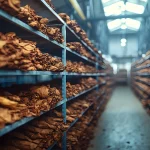
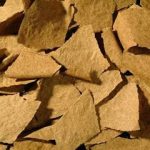
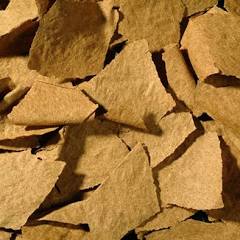
Reconstituted tobacco is a manufactured sheet material produced from tobacco by-products that would otherwise go to waste . These by-products include tobacco stems, leaf scraps, fines (small particles), and dust generated during primary tobacco processing . The material is processed into uniform sheets that mimic the aesthetic and physical properties of natural tobacco leaf, allowing it to be used interchangeably with traditional tobacco in manufacturing processes .
The concept dates back decades, with patents for reconstituted tobacco sheet production appearing as early as the 1960s . Today, it represents a sophisticated manufacturing sector that combines papermaking technology with tobacco science.
The Manufacturing Process
Raw Materials and Preparation
The production of reconstituted tobacco begins with the collection of tobacco waste materials. The tobacco industry generates substantial quantities of waste annually—approximately 1.25 million metric tons in 2010 and 6 million metric tons by 2020 . This waste, which cannot be simply landfilled due to its high nicotine and organic carbon content, serves as the raw material for reconstituted tobacco production .
Two Primary Production Methods
There are two main approaches to manufacturing reconstituted tobacco:
Wet Papermaking Process: This traditional method, similar to paper manufacturing, involves extracting soluble components from tobacco waste using aqueous solvents. The insoluble fiber-rich portion is refined and formed into sheets, while the extract is concentrated and later reapplied to the sheets . However, this process has significant environmental drawbacks, producing approximately 70 tons of wastewater for every ton of reconstituted tobacco manufactured .
Dry Process: A more modern and environmentally friendly alternative, the dry process uses air-flow molding technology to form a substrate from tobacco waste powder. This substrate is then coated with a solution containing adhesives, atomizing agents, and other ingredients . The dry process offers significant advantages: lower water consumption, reduced energy use, and minimal waste emissions compared to the wet method .
The Role of Adhesives
The mechanical integrity of reconstituted tobacco sheets is crucial for manufacturing efficiency. Research has shown that compound adhesives—particularly combinations of sodium carboxymethyl cellulose (CMC) and guar gum—create a synergistic effect through hydrogen bonding and physical cross-linking networks . This results in tensile strength of approximately 0.548 kN/m, sufficient for industrial processing requirements .
Environmental and Economic Benefits
Waste Reduction
The primary environmental benefit of reconstituted tobacco is its role in recycling tobacco waste. By converting by-products into usable material, manufacturers significantly reduce the volume of waste requiring disposal . This closed-loop approach aligns with broader sustainability goals and resource efficiency principles.
Cost Stability
Tobacco markets face increasing volatility due to challenging growing seasons, reduced quantities produced, and sharp price fluctuations . Reconstituted tobacco offers manufacturers a more stable and predictable cost structure while maintaining product quality . This economic stability makes it an attractive option for tobacco blenders seeking to mitigate market risks.
Operational Efficiency
Reconstituted tobacco degrades less during manufacturing than natural tobacco leaf, allowing manufacturers to retain more material in finished products . This improved efficiency translates to reduced costs and more consistent production outcomes.
Functional Advantages in Product Formulation
Consistency and Regulatory Compliance
One of the challenges tobacco manufacturers face is adhering to chemical limits mandated by regulations such as the Tobacco Products Directive . Reconstituted tobacco typically has a lower chemical profile than natural leaf, making it valuable for ensuring products meet regulatory requirements .
Customizable Properties
Manufacturers can create reconstituted tobacco with specific characteristics by controlling raw material combinations and processing parameters. This versatility allows for:
- Distinctive taste profiles
- Controlled nicotine release
- Customized physical properties
- Tailored combustion characteristics
Health and Safety Considerations
Reduced Toxicity
Research indicates that reconstituted tobacco can be formulated to have lower toxicity than conventional tobacco products. Studies have shown that reconstituted tobacco sheets can achieve lower nicotine release compared to commercial cigarettes . The pyrolysis (thermal decomposition) of reconstituted tobacco produces compounds within the 150–600°C range, including carbonyl compounds, alcohols, phenols, alkanes, and alkenes .
Advanced Formulations
Patent literature describes reconstituted tobacco formulations incorporating catalysts such as mesoporous aluminosilicates and activated carbons designed to reduce toxic compounds in tobacco smoke . These advanced formulations represent ongoing efforts to reduce the harm potential of tobacco products.
Applications Beyond Traditional Cigarettes
Heated Tobacco Products (HTPs)
Reconstituted tobacco has found new importance in the growing category of heated tobacco products (HTPs). Unlike traditional cigarettes that burn tobacco at high temperatures, HTPs heat tobacco to approximately 350°C, producing an aerosol without combustion . Reconstituted tobacco serves as an ideal raw material for these products due to its uniform composition and controlled properties .
Diverse Product Categories
Beyond cigarettes and HTPs, reconstituted tobacco finds applications in:
- Roll-your-own (RYO) cut rag products
- Pipe tobacco
- Shisha (water pipe tobacco)
- Cigar filler, binder, and wrapper materials
Quality Control and Performance Requirements
Tensile Strength Considerations
Industrial production requires reconstituted tobacco sheets with specific mechanical properties. The optimal tensile strength is approximately 1.00 kN/m—sufficient strength to prevent processing interruptions without compromising flexibility or flavor . Achieving this balance requires careful formulation of adhesives and optimization of manufacturing parameters including water content, spraying processes, and drying temperatures .
Bubble Structure in Specialized Applications
For applications such as cigar wrappers and binders, where the material makes a disproportionate contribution to taste characteristics, specialized foamed reconstituted tobacco sheets have been developed. These materials feature fine bubble structures where at least 80% of bubbles measure less than 100 microns, providing improved stability and more natural taste properties .
Industry Outlook
The global tobacco market continues to evolve, with reconstituted tobacco playing an increasingly strategic role. Major tobacco companies are directing resources toward alternative nicotine products, with approximately 35% of market development budgets focused on communicating product differentiation and adult education initiatives .
Manufacturers with reconstituted tobacco capabilities position themselves as strategic partners for product innovation, offering research and development support, regulatory expertise, and customized solutions for emerging product categories .
Conclusion
Reconstituted tobacco represents a sophisticated approach to resource efficiency in the tobacco industry. By transforming waste materials into a versatile, cost-effective, and functional ingredient, this technology addresses environmental concerns while enabling product innovation. From its origins as a simple waste-reduction strategy to its current role as an essential component in next-generation tobacco products, reconstituted tobacco demonstrates how manufacturing innovation can create value from what would otherwise be discarded.
As the tobacco industry continues to evolve toward potentially reduced-risk products, reconstituted tobacco will likely play an increasingly important role—not only as a manufacturing tool but as a platform for developing products with more controlled properties and potentially reduced harm profiles.